
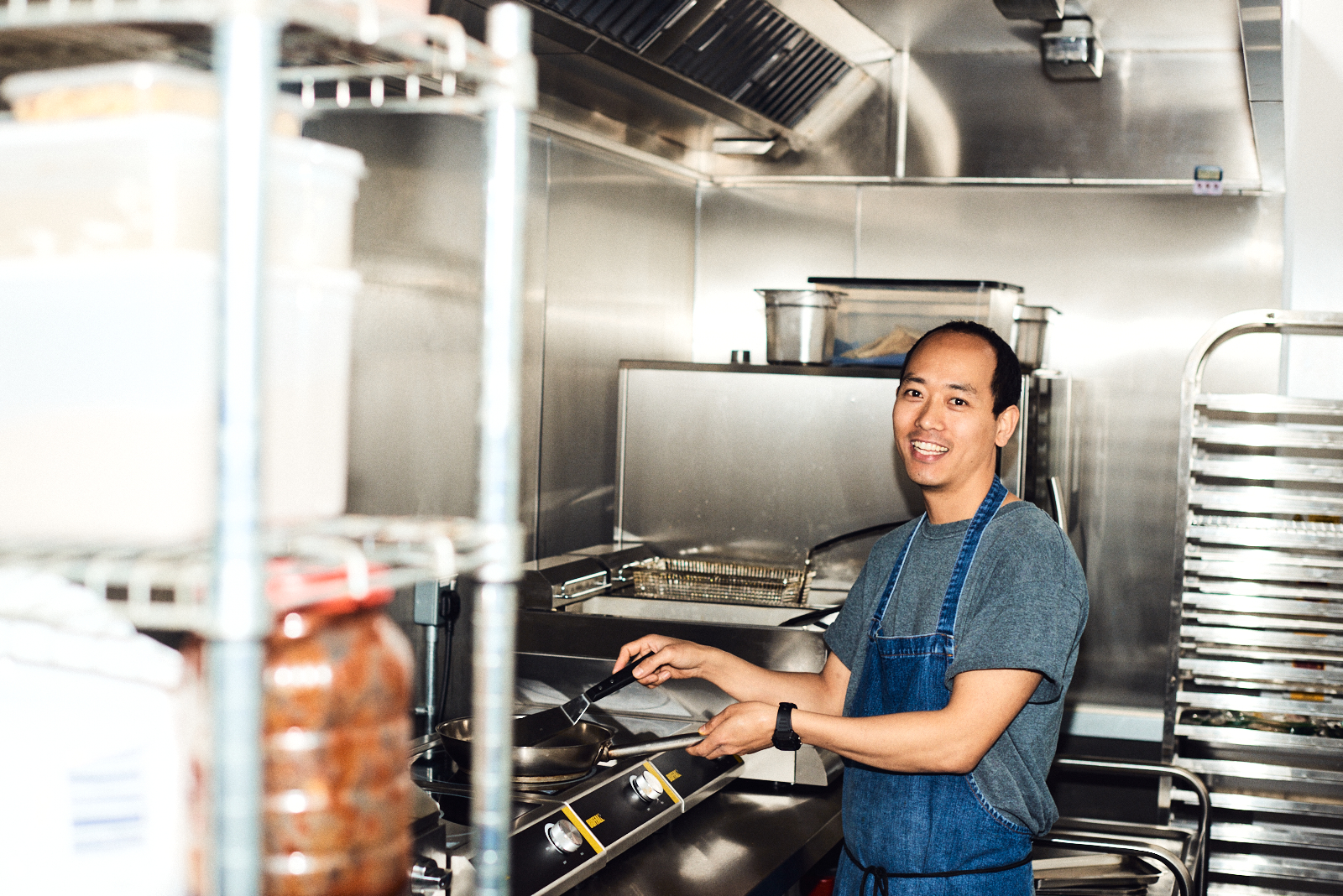
In the high-pressure environment of the UK food industry, a kitchen layout functions as more than just a floor plan; it is the blueprint of profitability. Whether for a start-up scaling out of a home environment or an established chain launching a new delivery node, the physical flow of the workspace dictates speed of service, labour costs, and food safety compliance. For renters, the challenge is distinct. Unlike owning a freehold where walls can be moved at will, renting a commercial space often requires working within fixed constraints. However, the rise of managed kitchen providers like Karma Kitchen has shifted this dynamic, allowing operators to access modular, pre-optimised infrastructure that adapts to their workflow. Designing a kitchen that maximises output per square foot while keeping teams safe is now a matter of strategic necessity.
The foundation of any efficient commercial kitchen is the Linear Workflow. This concept is not merely a productivity enhancement but a core principle of Hazard Analysis and Critical Control Point (HACCP) compliance, which UK Environmental Health Officers scrutinise during inspections. The principle of "Forward Motion" dictates that food should travel in one continuous direction, from "Goods In" to "Dispatch", without ever traveling backward. A poor layout where dirty crockery crosses paths with fresh preparation creates a cross-contamination risk that can compromise a 5-star Hygiene Rating. An effective flow moves logically through distinct zones: delivery and storage near the entrance, followed by preparation, cooking, plating, and finally dispatch, with the wash-up area strictly segregated to prevent contamination.
Commercial renters typically choose between two robust models based on their menu. The "Assembly Line" is the preferred choice for Dark Kitchens and limited-menu concepts like burger or pizza brands. Here, equipment is arranged in a straight line, allowing raw ingredients to start at one end and finished dishes to emerge at the other, facilitating the high-speed, repetitive production required by delivery algorithms. Conversely, the "Zonal Layout" suits catering and event preparation, where different blocks are dedicated to specific tasks such as pastry or salads. This allows multiple chefs to prepare different meal components simultaneously without collision, optimising the space for complex menu execution.
If the facility is a dark kitchen, the layout must prioritise the courier experience as highly as the cooking process. In a traditional restaurant, the pass serves as a boundary; in a delivery kitchen, it is the shopfront. The most common failure point is the "Pack and Stack" bottleneck. To mitigate this, operators should dedicate substantial counter space solely to packaging, ensuring room for open tablet devices, label printers, and stacks of branded materials. This station requires ample power sockets and hardwired internet data points, as a dropped Wi-Fi connection during a Friday night rush can be disastrous for order volume.
This design consideration is becoming increasingly critical due to regulatory changes. From September 2025, delivery platforms are tightening penalties regarding rider wait times. If a rider waits more than 15 minutes, the kitchen risks fines and algorithmic demotion. Consequently, the layout must facilitate a sub-5-minute "assembly to dispatch" time. The route from the packing bench to the rider collection point must be obstacle-free. Managed facilities often mitigate this pressure by including dedicated rider waiting lounges, keeping drivers out of the kitchen workflow to improve both hygiene and efficiency.
Renting commercial space in major UK cities is an expensive endeavour, often costing between £15 and £25 per square foot, meaning every inch must generate revenue. To maximise a small footprint, operators must think vertically. Wall storage offers a solution to free up precious counter space, utilizing high shelves for dry goods and magnetic strips for knives. Equipment selection also plays a role; investing in stackable units, such as placing one combi-oven atop another, effectively doubles cooking capacity without increasing the floor footprint.
Business needs are rarely static; a brand might launch with a sushi concept and pivot to hot ramen in winter. This is where the "Karma Kitchen Advantage" becomes apparent. Unlike a standard lease where a tenant is stuck with a fixed build, these units are designed with modular walls. If a business needs to expand, the facility can often combine units or adjust the space in as little as two days. This modularity allows operators to scale their square footage in line with order volume, preventing the financial drain of paying for empty, unused space.
When renting a shell unit, tenants often overlook "invisible" infrastructure until it becomes a costly problem. Ventilation is a primary concern, as the extraction system must meet TR19 standards for fire safety and insurance. The position of the extraction canopy dictates the cookline; a fryer cannot simply be moved if the canopy does not cover it. Managed kitchens address this by providing compliant, interlocked extraction systems pre-installed, removing a significant headache for the tenant.
Waste management is another area where layout impacts compliance. The "Simpler Recycling" legislation, effective from 31 March 2025, mandates that almost all UK businesses must separate food waste from general waste. In a small kitchen, finding space for multiple bins can consume valuable floor area. Managed providers like Karma Kitchen solve this by integrating LFC Biodigesters into their facilities. This technology digests food waste into wastewater, eliminating the need for bulky internal bins and ensuring instant compliance with the new laws.
Designing a kitchen from scratch is a complex task requiring architects, M&E consultants, and planning permissions, a distraction that can be fatal for a food business focused on its product. One of the distinct advantages of the managed model is the in-house design service. Specialists with catering backgrounds assist in configuring the space, understanding the nuances between a prep table and a pass. Because the provider controls the infrastructure, they can deliver a fully fitted, legally compliant kitchen in weeks rather than the six to nine months typical of a DIY fit-out. This approach offers significant capital efficiency, helping operators avoid the £50,000 to £100,000 upfront CAPEX sinkhole of building their own kitchen. Ultimately, the most efficient kitchen is one that allows the team to focus on cooking, not logistics.
%20(1).svg)

